
When immortality meets bureaucracy, humanity’s doom comes in triplicate. Welcome to the Overflow Camps—where people go when they can’t die, and government efficiency ensures they wish they could.
Short Synopsis
Torchwood infiltrates PhiCorp’s “Overflow Camps” to expose their horrifying true purpose. Gwen goes undercover in Wales, Rex and Vera sneak into an American camp, and Jack tries not to punch Oswald Danes in the face. By the end, we learn that immortality has a price—and it’s being burned alive in a government facility.
Extended Storyline
After discovering PhiCorp’s plans for “Overflow Camps,” Torchwood decides to split up—because nothing bad ever happens when teams separate in horror episodes. Gwen heads home to Wales to check on her father, Rex and Dr. Vera Juarez investigate a camp in California, and Jack stays behind to charm secrets out of Oswald Danes. Yes, that Oswald Danes, the child murderer turned global messiah. Humanity, you’re doing great.
In Wales, Gwen finds her father still suffering from a heart condition that, thanks to the Miracle, refuses to actually kill him. He’s carted off to an Overflow Camp—a supposedly humanitarian effort to care for those who can’t heal or die. Naturally, Gwen decides to break in. It’s a classic Torchwood move: she poses as a government worker, sneaks past security, and promptly starts causing trouble.
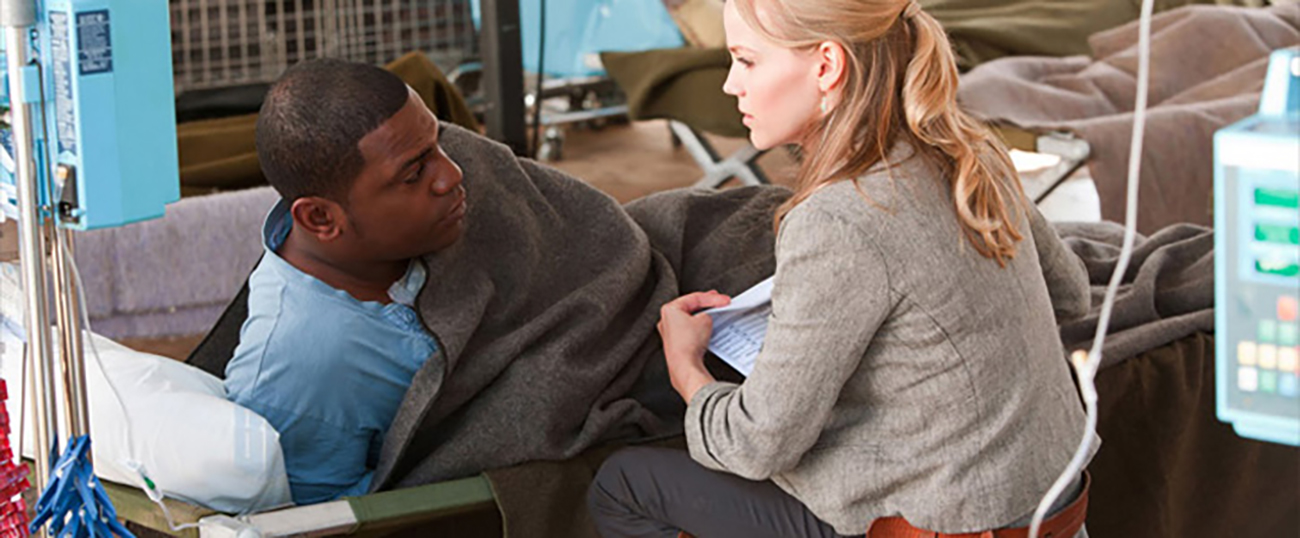
Meanwhile, Rex, Vera, and Esther infiltrate the California camp under the guise of official observers. What they find inside is a bureaucratic nightmare worthy of Kafka, if Kafka had been more into cremation. The camp is divided into three “Categories of Life”:
-
Category 1: People who are technically dead but still moving.
-
Category 2: People who are alive but not expected to be useful.
-
Category 3: The rest of us—still technically okay, for now.
It’s paperwork-based dystopia at its finest. And yes, the “Category 1” patients are being discreetly disposed of in massive “modules.” Spoiler: the modules are industrial-sized ovens. Nothing like a light bit of government-sanctioned mass murder to liven up a sci-fi show.
Back in L.A., Jack continues his psychological chess match with Oswald Danes. He tries to get information about PhiCorp and “The Families,” but Oswald’s too busy basking in the adoration of millions and complaining that immortality hasn’t made him feel better. Jack, as always, remains perfectly polite while visibly restraining his disgust. Their philosophical debate about guilt, punishment, and forgiveness is one of the show’s most chilling scenes—because for all his monstrosity, Oswald might not be wrong about how quickly humanity forgets.
Meanwhile, at the camp, Rex records damning evidence of what’s happening inside. Vera, ever the moral compass, decides to confront the administrator running the facility. Unfortunately, that administrator is a petty little man with delusions of authority, and in a fit of cowardly rage, he shoots her. But of course, she can’t die. So instead, she’s dragged—still conscious—into one of the modules and burned alive.
It’s one of the most horrifying sequences in Torchwood history: Vera screaming, smoke rising, Rex helplessly watching. The message is clear—immortality doesn’t end suffering; it just industrializes it.
Across the pond, Gwen’s father is also classified as Category 1 and nearly sent to a similar fate. In a desperate rescue mission, Gwen sneaks back into the camp and saves him by the skin of her teeth. Her rage at the system—and at PhiCorp’s complicity—boils over as she films the evidence, determined to expose everything.
The episode closes with the team watching the footage they’ve gathered: miles of “modules” filled with still-living bodies, burning in silence. The realization hits hard. Humanity hasn’t found a cure for death—it’s found a way to dispose of the inconvenient. Gwen, shaken but resolute, vows that Torchwood will tear it all down.
Jack, ever the optimist, quietly mutters, “We always think we can save the world. Maybe this time, we’re already too late.”